
All your code reviews.
One dashboard.
Bellugo centralizes your GitHub and GitLab pull requests, filters by status and CI, and reminds reviewers automatically — so nothing stays blocked.
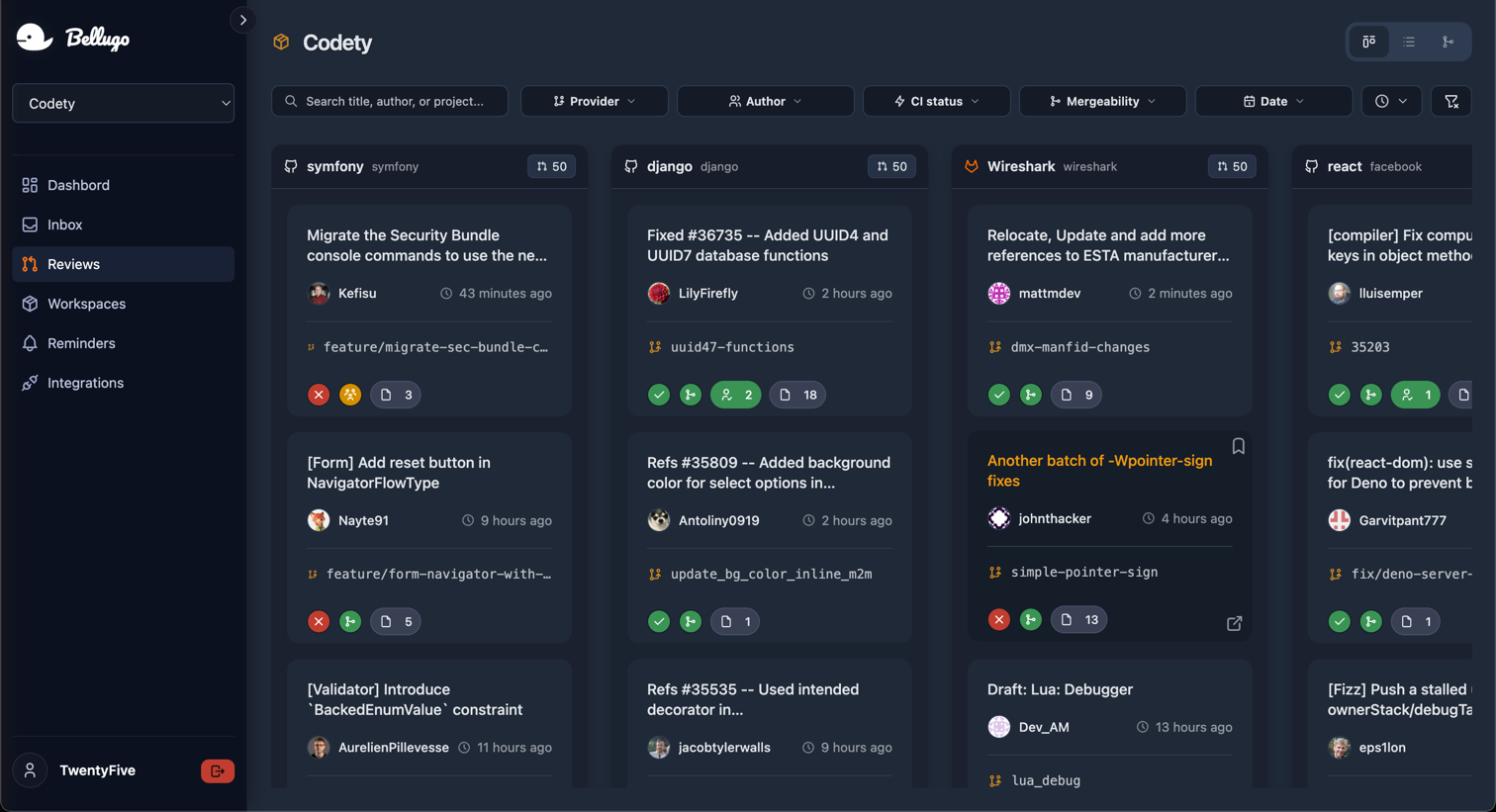
Review code faster, without the tab chaos
Scan diffs, check CI, approve — all in one smooth flow. No more bouncing between GitHub, Slack, and your calendar.
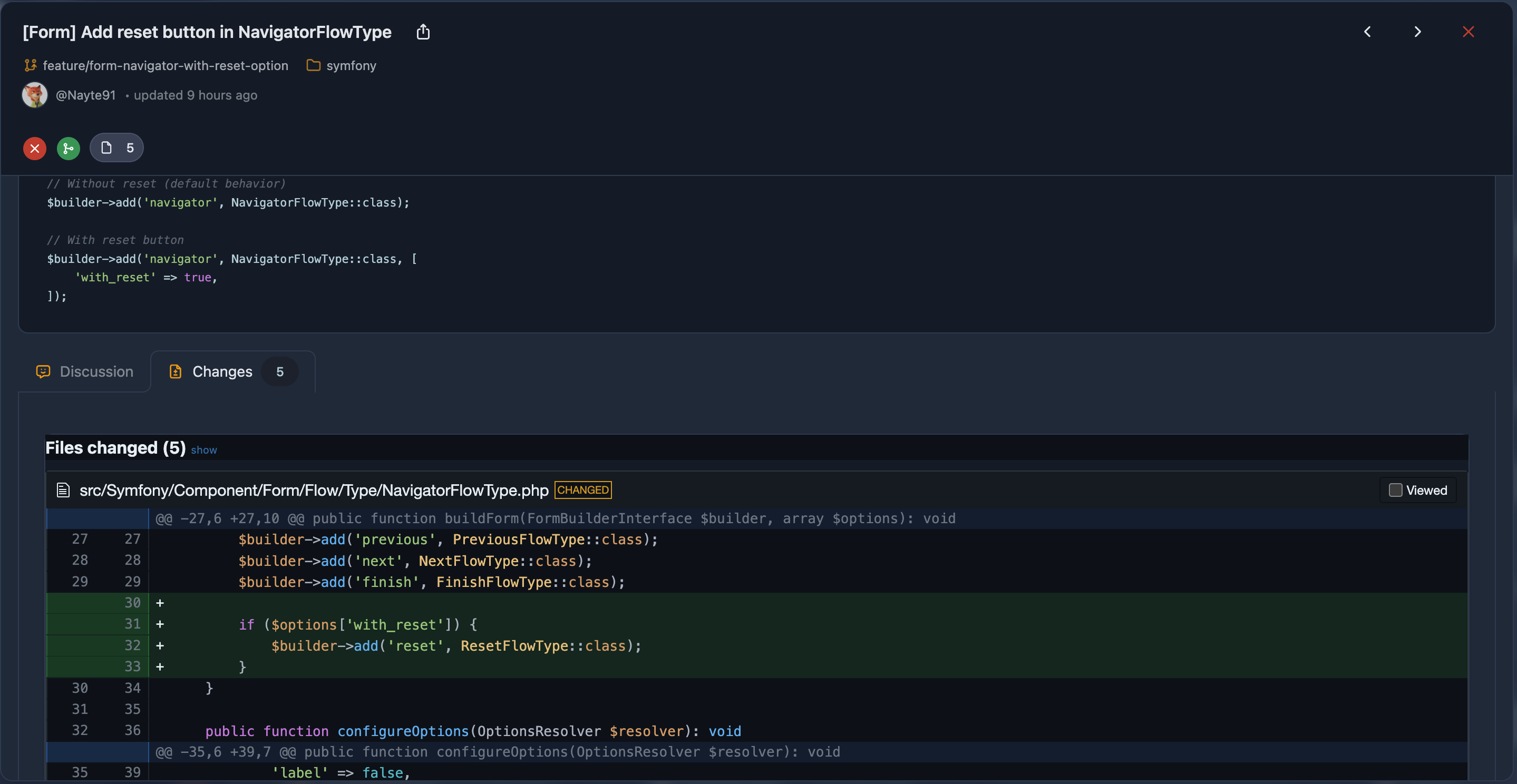
Read diffs, comments, and CI in one view
Stop bouncing between GitHub tabs. Bellugo pulls title, description, diffs, comments and CI status into a single focused panel — so you understand a review in seconds.
Navigate to the next review with arrow keys, like going through an inbox.
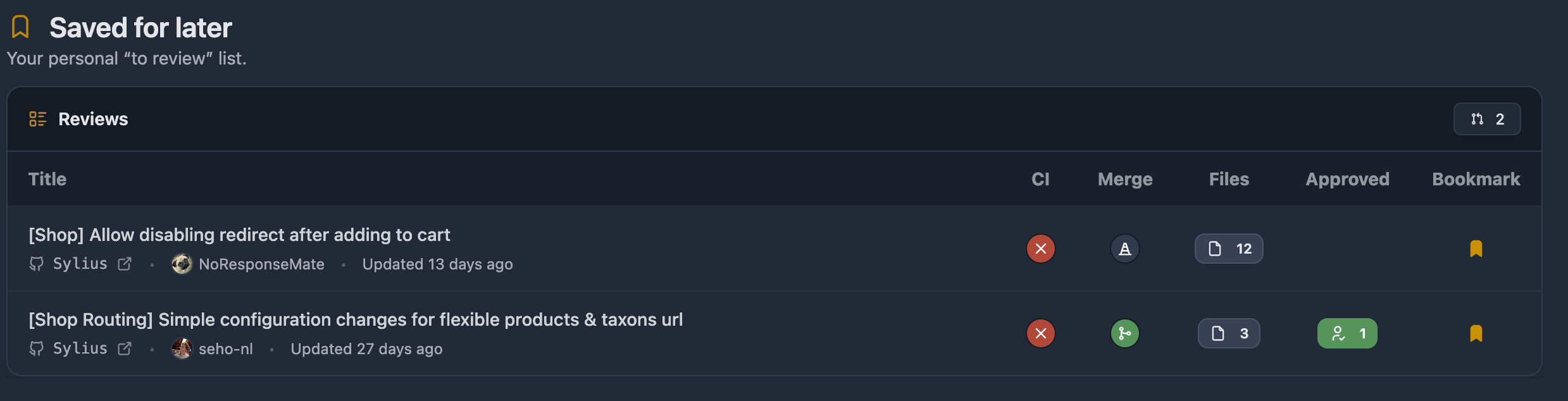
Bookmark now, approve in seconds later
Save reviews you want to come back to. When you have focused time, open your bookmarks, scan the diff smoothly, and approve directly from Bellugo — no context switching back to GitHub or GitLab.
The whole flow — read the code, check CI, approve — happens in one place. Reviews that used to take 10 minutes now take 2.
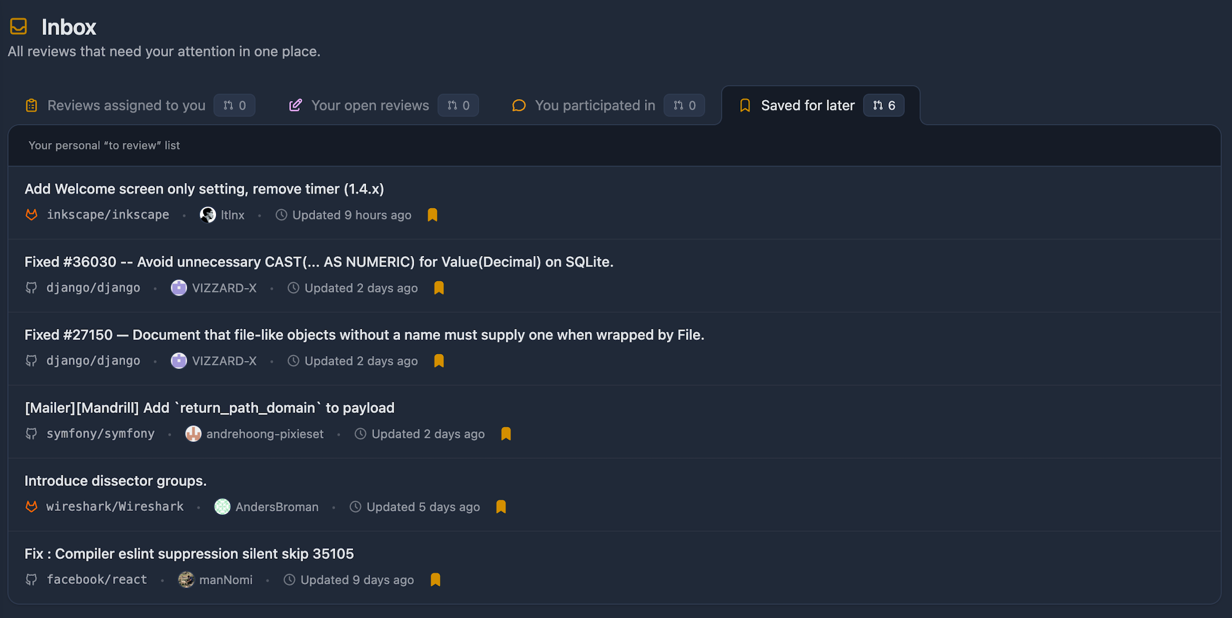
One inbox for everything that needs your attention
Reviews assigned to you, your own open PRs, contributions you participated in, and bookmarked reviews — all in one prioritized queue.
No more chasing links in Slack. Open Bellugo and your review work is already organized.
No more manual follow-ups
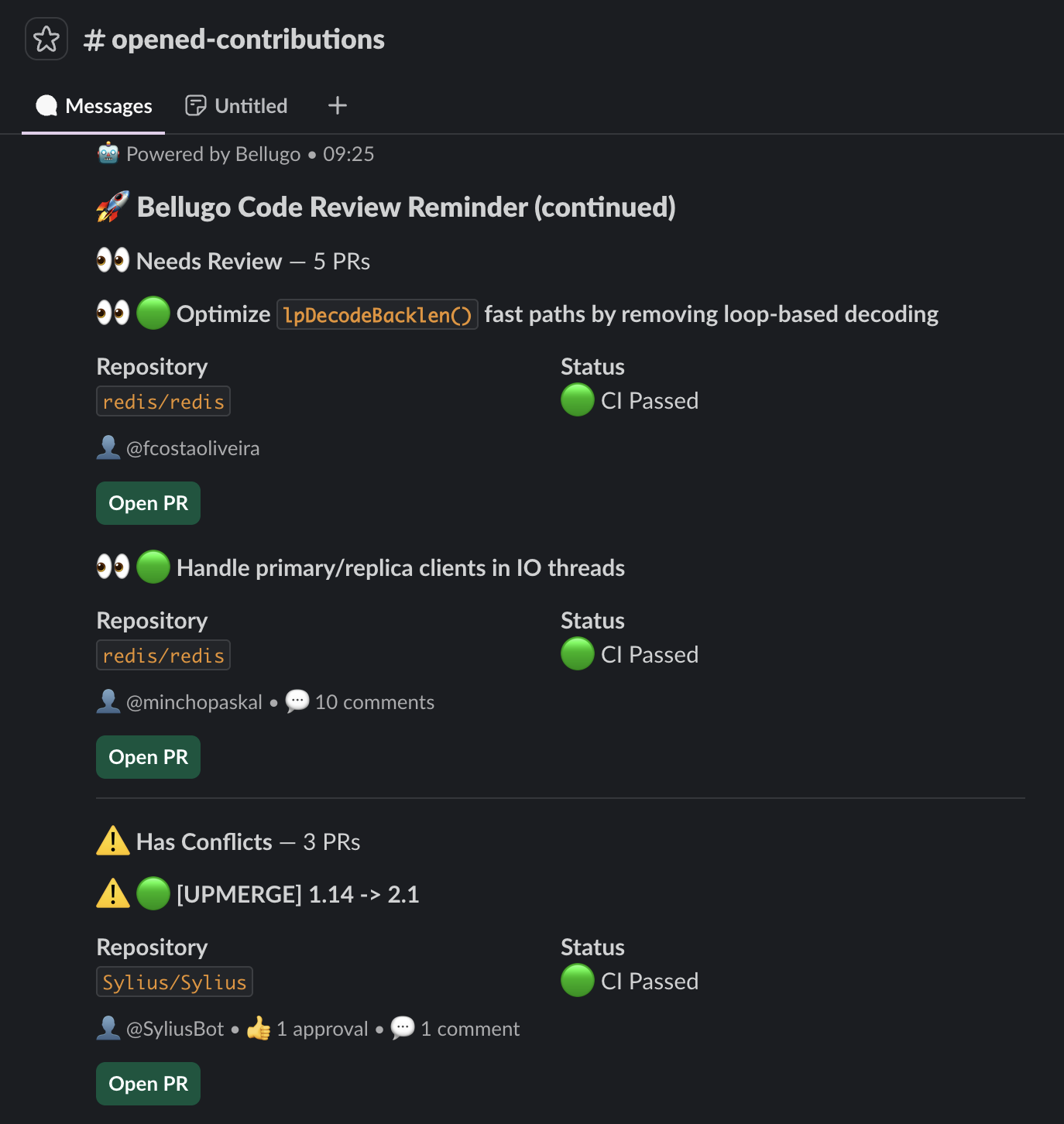
When a review sits idle, Bellugo nudges the right people at the right time — on Slack, Teams, or email. You define the delay, Bellugo handles the rest.
Stop pinging teammates manually. Reviews get unblocked without anyone playing the bad cop.
Know where your team loses time
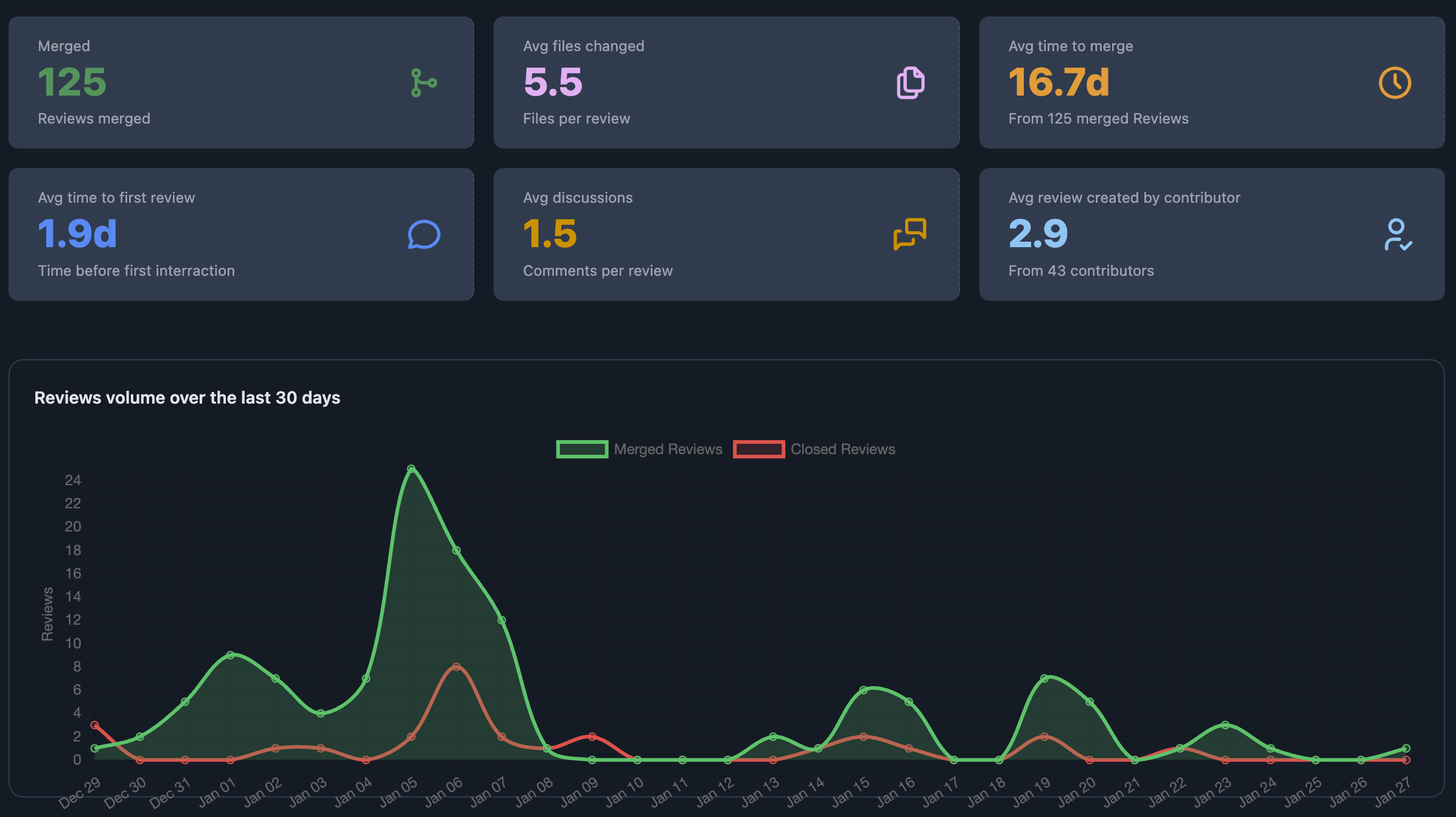
Track review turnaround, time-to-first-response, and merge velocity across repositories. Identify which repos are slow, which reviewers are overloaded, and where PRs get stuck.
Data-driven decisions instead of gut feelings. Fix bottlenecks before they become team blockers.
Save hours on every review cycle
Less time hunting PRs, less time waiting for reviewers, more time shipping code.
View reviews as Kanban or list
Switch between a Kanban board grouped by status and a sortable list view. See at a glance what is draft, in review, approved, or blocked — across all your repositories.
Filter by CI, mergeability, author, and age
Stop scrolling through dozens of PRs. Narrow down to what matters: failing CI, reviews older than 3 days, a specific teammate, or only mergeable PRs ready to ship.
Read code smoothly, approve faster
Open a review, scroll through the diff, check CI — and approve. All in one fluid flow without leaving Bellugo. What used to take 10 minutes of tab-juggling now takes 2.
Automatic reminders that unblock PRs
Bellugo nudges idle reviewers on Slack, Teams, or email after a delay you define. No more awkward manual pings — reviews get unblocked without anyone playing the bad cop.
Bookmark now, approve later in one click
Save interesting PRs to your personal queue. When you have focused time, go through your bookmarks and approve directly — the diff, CI, and context are already loaded.
Insights on review speed and bottlenecks
Track time-to-first-response, merge velocity, and reviewer load. Spot which repos are slow, which teammates are overloaded, and fix issues before they snowball.
Diffs, comments, and CI in one panel
No more opening 4 tabs per review. Bellugo shows the full review context — code changes, inline comments, CI checks, and metadata — in a single unified view.
Multi-repo, multi-platform
Connect GitHub and GitLab repositories in the same workspace. One dashboard for all your teams, regardless of which platform they use. Bitbucket support coming soon.
Limited spots. No spam.
The problem
Reviews take too long, get buried in chat tools, and lack visibility across repositories. These delays hurt focus, velocity, and team morale.
Slow reviews bottleneck delivery
Long review cycles block features, create frustration, and break momentum for both authors and reviewers.
Requests get lost in chat
Review links dropped in Slack or Teams drown in conversations — no tracking, no priority, no reliable follow-up.
No global visibility
With many repositories, it is impossible to know at a glance what is pending, blocked, mergeable, or urgent.
Bellugo automatically discovers open reviews once your repositories are connected.
Connects where your team already works
Pull requests from your code platforms, reminders on your communication tools.
GitHub
Pull requests & checks
GitLab
Merge requests & pipelines
Slack
DMs & channel reminders
Teams
Review follow-ups
Digests & nudges
More soon
Bitbucket, Discord...